
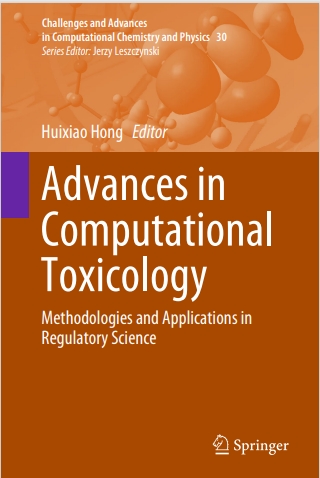
Advances in Computational Toxicology: Methodologies and Applications in Regulatory Science | Book-Club |
About Course
Description
This book explores the latest advancements in computational toxicology, focusing on methodologies such as predictive modeling, machine learning, and high-throughput screening. It highlights their applications in regulatory science, including risk assessment, chemical safety evaluation, and decision-making processes. The book serves as a valuable resource for understanding how computational tools are transforming toxicology and regulatory frameworks.
Implementation Plan for the Book Club Over Two Months
1. Book Selection
-
Book: Advances in Computational Toxicology: Methodologies and Applications in Regulatory Science.
-
Level: Intermediate to Advanced.
-
Total Chapters: 12 (approximate).
2. Chapter Division
-
The book will be divided into 8 parts (one part per week).
-
Each week, members will read 1-2 chapters depending on the length and complexity.
3. Weekly Schedule
-
Week 1: Chapter 1 (Introduction to Computational Toxicology) + Chapter 2 (Data Sources and Management).
-
Week 2: Chapter 3 (Predictive Modeling in Toxicology) + Chapter 4 (Machine Learning Applications).
-
Week 3: Chapter 5 (High-Throughput Screening Methods) + Chapter 6 (Chemical Safety Assessment).
-
Week 4: Chapter 7 (Risk Assessment Frameworks) + Chapter 8 (Regulatory Decision-Making).
-
Week 5: Chapter 9 (Case Studies in Computational Toxicology) + Chapter 10 (Challenges and Limitations).
-
Week 6: Chapter 11 (Future Directions in Computational Toxicology) + Chapter 12 (Conclusion and Summary).
-
Week 7: Review and Recap of Key Concepts.
-
Week 8: Final Discussion and Evaluation.
4. Weekly Meetings
-
Duration: 1-2 hours per meeting.
-
Agenda:
-
Discuss the assigned chapters.
-
Explain complex concepts with the help of an instructor.
-
Answer members’ questions.
-
Open discussion on ideas presented in the chapters.
-
-
Use interactive tools like presentations or videos to enhance understanding.
5. Interactive Activities
-
Workshops: Organize practical workshops on using computational tools (e.g., predictive modeling software).
-
Side Discussions: Create a Facebook or WhatsApp group for discussions outside meetings.
-
Weekly Challenges: For example, writing a summary of the week’s chapters or analyzing a small dataset.
6. Final Evaluation
-
At the end of the two months, conduct a final evaluation:
-
Survey to assess the reading and meeting experience.
-
General discussion session about the book as a whole.
-
Members share their personal evaluation of the book and what they learned.
-
Course Content
Advances in Computational Toxicology: Methodologies and Applications in Regulatory Science
-
Advances in Computational Toxicology: Methodologies and Applications in Regulatory Science
Student Ratings & Reviews